
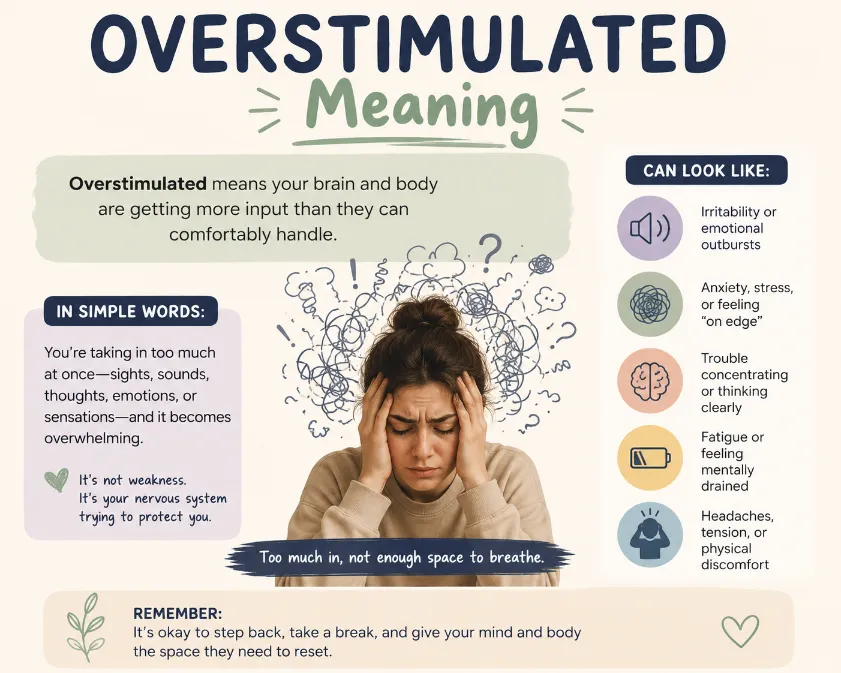
Overstimulated describes a mental or physical state in which the brain receives more sensory, emotional, or mental input than it can comfortably process. Noise, bright lights, crowded spaces, social activity, screens, strong emotions, or too many tasks at once can all contribute to this feeling.
The overstimulated meaning can vary slightly based on the situation, but the central idea remains the same: your mind feels overloaded by too much information or stimulation.
A person experiencing overstimulation may feel irritated, restless, tired, distracted, anxious, or eager to spend time in a quiet place.
What Does Overstimulated Mean?
The word overstimulated means receiving more stimulation than the mind or body can comfortably handle.
Stimulation can come from many sources, such as:
- Loud music or constant background noise
- Bright lights or busy surroundings
- Too many conversations
- Long periods of screen use
- Heavy workloads
- Crowded public spaces
- Strong emotions
- Frequent notifications
- Lack of rest
- Several tasks happening at once
For example, someone may spend several hours in a crowded shopping center, listen to loud music, answer messages, and handle work calls. Afterward, that person may feel mentally exhausted and want silence. That reaction can describe being overstimulated.
Overstimulated Meaning in Simple Words
In simple language, overstimulated means feeling overloaded by too much sensory or mental activity.
A simple example:
“I had a busy day with lots of noise, calls, and social activity. Now I feel overstimulated and need some quiet time.”
The word usually describes a temporary state rather than a personality trait.
Overstimulated Meaning in Texting and Social Media
In texting, chats, and social media, overstimulated can describe emotional or sensory overload.
Someone may write:
- “I’m so overstimulated today.”
- “This place is making me overstimulated.”
- “Too many notifications have me overstimulated.”
- “I need some alone time. I’m overstimulated.”
- “My brain feels overstimulated after scrolling for hours.”
Online, the term can also have a casual meaning. A person may use it simply to say that their brain feels tired after too much content, noise, conversation, or activity.
Signs of Being Overstimulated
Overstimulation can affect the body, mood, attention, and behavior. Common signs may appear together or separately.
| Area | Possible Signs |
|---|---|
| Mood | Irritability, frustration, emotional sensitivity |
| Mind | Racing thoughts, poor concentration, mental fatigue |
| Body | Tension, tiredness, restlessness |
| Senses | Sensitivity to noise, light, touch, or crowds |
| Behavior | Wanting silence, isolation, or a break |
| Communication | Difficulty following conversations or answering messages |
| Sleep | Trouble relaxing after a busy day |
A person may also feel the urge to leave a noisy environment or stop using a phone for a while.
What Causes Overstimulation?
Many everyday situations can create sensory or mental overload. The source may be physical, emotional, digital, or related to daily responsibilities.
Common causes include:
- A noisy workplace
- Crowded streets or shopping centers
- Constant phone notifications
- Long social gatherings
- Heavy study sessions
- Excessive multitasking
- Bright screens
- Loud television or music
- Emotional conflict
- Too little downtime
- A packed daily schedule
Several small sources can add up. A phone buzzing repeatedly may seem minor, but combined with work pressure, traffic, conversations, and household tasks, the total stimulation can feel overwhelming.
Overstimulated vs Overwhelmed
Overstimulated and overwhelmed have similar meanings, but they focus on different experiences.
| Word | Main Idea | Example |
|---|---|---|
| Overstimulated | Too much sensory or mental input | “The noise is making me overstimulated.” |
| Overwhelmed | Too much pressure, emotion, work, or responsibility | “I have so much work that I feel overwhelmed.” |
The two conditions can occur together. A noisy office may create sensory overload, while a large workload may add emotional pressure.
Is Overstimulated a Negative Word?
The word overstimulated generally describes an uncomfortable state, so it can carry a negative tone. Still, it does not automatically suggest a serious problem.
Someone might use the term after a busy afternoon, a long party, a loud concert, or several hours online.
For example:
“The concert was fun, but I feel overstimulated now.”
Here, the speaker enjoyed the experience but needs quiet and rest afterward.
Overstimulated in Everyday Conversation
The term fits naturally into casual conversations about mood, work, school, social activity, and digital habits.
Examples include:
- “I’m feeling overstimulated after being around so many people.”
- “My brain feels overstimulated after all those meetings.”
- “The lights and noise made me feel overstimulated.”
- “I’m going offline for a while because I feel overstimulated.”
- “I need a quiet evening after such a busy day.”
These sentences show how the term can describe both sensory overload and mental fatigue.
How to Deal With Feeling Overstimulated
A few simple changes may help reduce stimulation and create a calmer environment.
- Move to a quieter room.
- Lower the volume of music or television.
- Dim harsh lights.
- Put the phone on silent.
- Take a short break from social media.
- Focus on one task instead of several.
- Drink some water and rest.
- Spend a few minutes in a peaceful outdoor area.
- Reduce unnecessary conversations for a short period.
- Give yourself time to relax after a busy activity.
The best option depends on the source of the overload. Someone bothered by noise may benefit from silence, while someone dealing with digital overload may benefit from a screen break.
Overstimulated Meaning for Kids
Children can also become overstimulated after long periods of noise, play, social activity, travel, or screen use.
Possible signs may include:
- Irritability
- Crying
- Restlessness
- Covering the ears
- Avoiding interaction
- Difficulty settling down
- Sudden frustration
- Wanting to leave a busy place
A calm room, reduced noise, a familiar routine, and a short rest period may help a child settle.
Overstimulated Meaning for Adults
Adults may experience overstimulation during demanding workdays, crowded events, family gatherings, long commutes, or heavy digital use.
A busy schedule can leave little time for mental recovery. Constant alerts, emails, meetings, and conversations may add further stimulation.
For some adults, the clearest sign is a strong desire for silence and personal space after a busy day.
Overstimulated vs Sensitive
Being overstimulated does not automatically mean someone is highly sensitive. Anyone can experience sensory or mental overload after enough stimulation.
Sensitivity can affect how strongly a person reacts to sound, light, touch, crowds, or other sensory input. Overstimulation describes the resulting state of overload.
Why Do I Feel Overstimulated So Easily?
Several factors may contribute to frequent overstimulation, including lack of sleep, a demanding schedule, prolonged screen exposure, noisy surroundings, emotional pressure, and limited rest.
Keeping track of the situations that trigger the feeling can help identify patterns. For example, someone may notice that long social events, loud environments, or constant notifications are common triggers.
“Overstimulated Meaning: Final Explanation”
The overstimulated meaning is simple: your brain or body is receiving more sensory, emotional, or mental input than it can comfortably process at that moment.
The term can describe noise, crowds, screens, conversations, emotions, work pressure, or several sources at once. In casual speech, it usually means a person feels mentally or physically overloaded and needs a break.
What does overstimulated mean in simple English?
It means feeling overloaded because there is too much sensory, mental, or emotional stimulation.
What is an example of overstimulated?
A person may feel overstimulated after spending hours in a loud, crowded place while using their phone and handling many conversations.
Is overstimulated the same as stressed?
Not exactly. Stress usually relates to pressure or demands, while overstimulation focuses more on excessive sensory or mental input. Both feelings can happen together.
Can social media make you feel overstimulated?
Yes. Continuous scrolling, notifications, videos, sounds, and a large amount of information can leave someone feeling mentally overloaded.
What is the opposite of overstimulated?
Words such as calm, relaxed, settled, peaceful, and understimulated can express the opposite depending on the situation.