
Advice TheWeeklyHealthiness focuses on simple wellness habits, balanced nutrition, physical activity, quality sleep, stress management, and responsible supplement use. The main goal is to make healthy living easier through realistic daily choices rather than strict routines or expensive products.
A healthier lifestyle does not require a complete change in your schedule. Small steps, such as eating more vegetables, walking regularly, drinking enough water, and maintaining a steady sleep schedule, can support better physical and mental well-being.
What Is Advice TheWeeklyHealthiness?
Advice TheWeeklyHealthiness refers to practical health and wellness guidance covering nutrition, fitness, supplements, and everyday lifestyle habits. The general approach centers on accessible recommendations that readers can apply to their daily routines.
The main areas of wellness covered by this approach are:
- Nutrition: Making balanced food choices and eating a variety of nutritious foods.
- Fitness: Adding regular movement to daily life.
- Sleep: Maintaining healthy sleeping habits and allowing enough time for rest.
- Mental wellness: Managing stress through relaxation, hobbies, and supportive relationships.
- Supplement safety: Checking ingredients, dosage instructions, possible side effects, and medication interactions.
- Preventive care: Seeking appropriate medical guidance and attending recommended health checkups.
These areas work together to support a healthier lifestyle. Individual needs vary according to age, activity level, medical history, and personal circumstances.
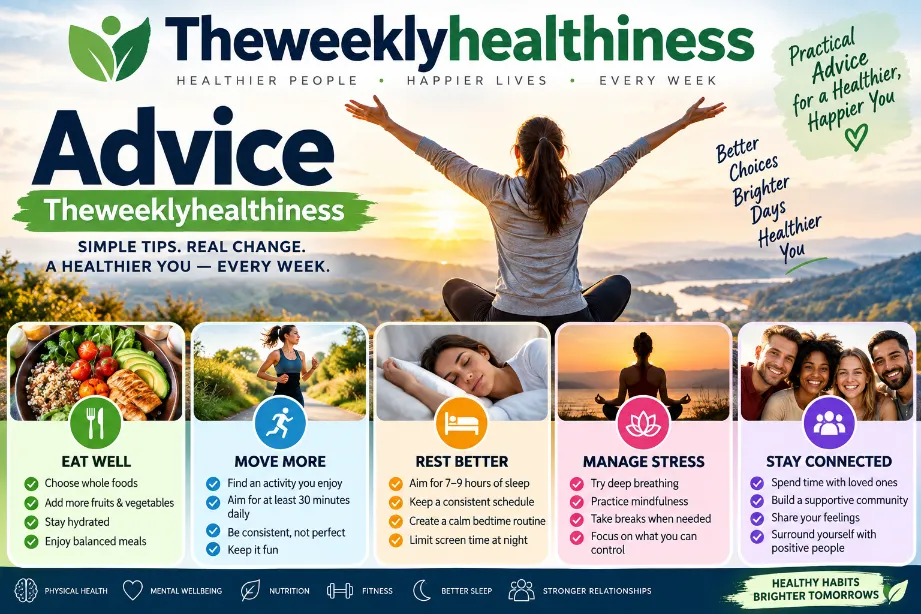
Advice TheWeeklyHealthiness for Better Daily Habits
Healthy routines become easier to maintain through small, manageable actions. Rather than changing every part of your life at once, begin with a few habits that fit your schedule.
Practical steps to try include:
- Drink water regularly throughout the day.
- Add vegetables or fruit to your meals.
- Take a walk or participate in an activity you enjoy.
- Maintain a regular bedtime and waking time.
- Take short breaks during demanding work or study sessions.
- Prepare simple meals at home.
- Avoid tobacco and limit exposure to harmful substances.
- Schedule medical appointments according to your personal health needs.
Consistency matters more than perfection. Missing a workout or eating an occasional treat does not erase the benefits of a generally healthy routine.
Nutrition Tips TheWeeklyHealthiness for Balanced Eating
Food provides energy and nutrients that the body needs for normal growth, repair, and daily function. A balanced eating pattern includes a variety of foods rather than relying on one special ingredient or restrictive diet.
Choose a Variety of Nutritious Foods
A balanced diet can contain:
- Fruits and vegetables: Sources of vitamins, minerals, fiber, and other beneficial compounds.
- Whole grains: Foods such as oats, brown rice, and whole-wheat bread.
- Protein sources: Eggs, fish, poultry, beans, lentils, tofu, and other suitable options.
- Healthy fats: Sources such as nuts, seeds, olive oil, and certain fish.
- Dairy or fortified alternatives: Options that provide calcium, protein, and other nutrients.
Aim for variety across your meals. Your exact needs may differ according to your health, dietary preferences, budget, and activity level.
Reduce Excess Sugar and Salt
Frequent consumption of foods and drinks high in added sugar or sodium can make a balanced diet harder to maintain. Simple changes can help:
- Replace some sugary drinks with water.
- Compare nutrition labels before purchasing packaged foods.
- Use herbs, spices, garlic, and lemon to add flavor.
- Choose fruit or unsweetened yogurt for a snack.
- Limit heavily processed foods containing large amounts of sodium.
You do not need to remove every favorite food from your diet. A balanced eating pattern allows flexibility while prioritizing nutritious choices.
Create a Simple Meal Plan
Planning meals can save time, reduce food waste, and make nutritious eating more convenient.
| Meal | Practical option | Main benefit |
|---|---|---|
| Breakfast | Oats, milk, and fruit | Fiber and energy |
| Lunch | Lentils, vegetables, and whole-wheat roti | Protein and fiber |
| Snack | Fruit, nuts, or plain yogurt | Nutrients between meals |
| Dinner | Fish, chicken, beans, or tofu with vegetables and rice | Protein and varied nutrients |
Adjust portion sizes to your appetite and personal needs. These examples offer general suggestions rather than a prescribed diet.
Fitness Advice TheWeeklyHealthiness for Everyday Movement
Regular physical activity supports cardiovascular health, muscle strength, mobility, and mental well-being. Exercise does not have to take place in a gym.
Suitable activities may include:
- Brisk walking
- Cycling
- Swimming
- Dancing
- Bodyweight exercises
- Stretching and mobility work
- Recreational sports
Adults can aim for at least 150 minutes of moderate-intensity aerobic activity each week, alongside muscle-strengthening activities on two or more days, following World Health Organization guidance.
A simple weekly routine may look like this:
| Day | Suggested activity |
|---|---|
| Monday | 20–30 minutes of walking |
| Tuesday | Basic strength exercises |
| Wednesday | Walking or cycling |
| Thursday | Stretching and light movement |
| Friday | Walking or another enjoyable activity |
| Saturday | Strength training or recreational sports |
| Sunday | Gentle movement or rest |
Start at a comfortable level and increase activity gradually. Adapt this schedule to your fitness level, available time, and health requirements. Anyone with a medical condition or exercise-related symptoms should ask a qualified healthcare professional for suitable guidance.
Sleep Advice TheWeeklyHealthiness for Better Rest
Sleep supports memory, mood, concentration, and general health. Poor sleep can make daily tasks harder and may affect physical and emotional well-being.
Most adults need at least seven hours of sleep each night, although individual requirements vary.
Try these practical sleep habits:
- Maintain a regular bedtime and waking time.
- Keep your bedroom quiet, dark, and comfortable.
- Reduce stimulating activities close to bedtime.
- Avoid caffeine late in the day, particularly during the afternoon or evening.
- Allow enough time to relax before sleeping.
- Keep a sleep diary to identify patterns that affect rest.
Persistent insomnia, loud snoring with breathing pauses, or excessive daytime sleepiness deserves medical attention. Good sleep habits can help, but some sleep problems require professional assessment.
Mental Wellness and Stress Management
Mental health deserves the same attention as physical health. Work pressure, financial concerns, family responsibilities, and lack of rest can contribute to stress.
Advice TheWeeklyHealthiness can be applied through simple activities that make daily life more manageable.
Consider these options:
- Practice slow breathing for a few minutes.
- Spend time outdoors.
- Keep in touch with supportive friends or relatives.
- Make time for hobbies and enjoyable activities.
- Break large tasks into smaller steps.
- Set reasonable boundaries around work and personal time.
- Talk with a qualified mental health professional during periods of persistent distress.
There is no single stress-management method that works for everyone. Try practical options and pay attention to how they affect your mood and daily functioning.
Supplement Information TheWeeklyHealthiness: Safe and Responsible Use
Dietary supplements may contain vitamins, minerals, herbs, amino acids, or other ingredients. Some individuals benefit from particular supplements, but not everyone needs them.
A supplement should serve a clear purpose rather than replace a balanced diet or prescribed treatment.
Before purchasing a product, review the following details:
| What to check | Why it matters |
|---|---|
| Ingredient list | Shows the substances present in the product |
| Serving size | Clarifies the amount intended for use |
| Dosage instructions | Provides directions from the manufacturer |
| Safety warnings | Highlights restrictions and possible risks |
| Quality information | Helps assess testing and manufacturing standards |
| Medication interactions | Helps identify possible conflicts with medicines |
More is not always better. Excessive amounts of certain vitamins and minerals can cause harm, and some herbal products can interact with prescription medicines.
Ask a qualified healthcare professional or pharmacist for advice before starting a supplement, particularly during pregnancy, while breastfeeding, with an existing medical condition, or while taking medication.
How to Identify Reliable Health Advice
Online wellness content varies in quality. A useful resource should explain its claims clearly, avoid unrealistic promises, and encourage professional care for medical concerns.
Use these checks before acting on health advice:
- Look for information supported by credible medical or public health sources.
- Check publication dates for guidance that may change over time.
- Review the author’s qualifications and relevant expertise.
- Be cautious about products claiming to cure several unrelated conditions.
- Avoid advice that encourages stopping prescribed treatment without medical supervision.
- Compare health claims with guidance from qualified healthcare organizations.
Personal testimonials and social media recommendations cannot establish that a treatment works or that a product is safe for everyone.
A Weekly Wellness Checklist
A weekly checklist can make healthy habits easier to review without creating unnecessary pressure.
-
Eat a variety of fruits, vegetables, whole grains, and protein sources.
-
Participate in regular physical activity.
-
Maintain a suitable sleep schedule.
-
Drink water regularly.
-
Make time for relaxation and social connection.
-
Review supplement use and avoid unnecessary products.
-
Arrange medical care for symptoms or concerns that need professional attention.
Use the checklist as a flexible guide. Your routine should support your health rather than create another source of stress.
Common Mistakes to Avoid With Health Advice
Even helpful wellness recommendations can become counterproductive through unrealistic expectations or unsafe practices.
Common mistakes include:
- Starting a very restrictive diet without a medical reason.
- Exercising too intensely before developing basic fitness.
- Taking several supplements without checking their ingredients.
- Treating online advice as a substitute for diagnosis or medical care.
- Expecting immediate results from lifestyle changes.
- Ignoring persistent pain, unusual fatigue, or other concerning symptoms.
- Comparing your progress with someone who has different health needs.
A gradual, flexible approach makes it easier to maintain healthy routines over time.
Benefits of Following Advice TheWeeklyHealthiness
Practical wellness habits can support several areas of daily life. Results vary according to personal circumstances and the habits a person adopts.
Potential benefits of a balanced routine include:
- Better dietary variety and nutrient intake.
- Improved physical fitness and mobility.
- More regular sleep patterns.
- Healthier ways to manage everyday stress.
- Greater awareness of supplement safety.
- Better preparation for conversations with healthcare professionals.
- More consistent attention to preventive health.
No website or lifestyle routine can guarantee freedom from illness. Healthy habits can support general well-being, but genetics, environment, medical conditions, and access to healthcare also affect health outcomes.
Final Thoughts on Advice TheWeeklyHealthiness
Advice TheWeeklyHealthiness offers a practical approach to everyday wellness: prioritize balanced meals, regular movement, adequate sleep, stress management, and responsible supplement use. Reliable health information and realistic goals can help people make better decisions about their routines.
Start with small actions that fit your life, review your progress regularly, and consult qualified healthcare professionals for personal medical concerns. A flexible approach can make healthy living more manageable and sustainable.
What does Advice TheWeeklyHealthiness mean?
It refers to practical wellness guidance covering nutrition, exercise, sleep, stress management, supplements, and everyday health habits.
Can beginners follow Advice TheWeeklyHealthiness?
Yes. Beginners can start with manageable steps, such as taking short walks, eating more vegetables, maintaining regular sleep hours, and drinking water throughout the day. Changes should suit personal health needs.
Does TheWeeklyHealthiness provide medical treatment?
Wellness content serves an educational purpose. Online guidance cannot replace medical diagnosis, prescribed treatment, or personalized advice from a qualified healthcare professional.
Are supplements necessary for everyone?
No. Supplement needs vary. Some individuals may benefit from particular nutrients, while others can meet their needs through food. A healthcare professional can help assess individual requirements.
How long does it take to notice results from healthy habits?
The time varies by habit, starting point, and personal circumstances. Some changes, such as a more regular sleep schedule, may improve daily comfort relatively soon. Improvements in fitness or other health measures may require weeks or months of consistent effort.
How can I create a realistic wellness routine?
Choose two or three manageable habits, schedule time for them, and review your progress each week. Add further changes gradually rather than attempting a complete lifestyle overhaul at once.