
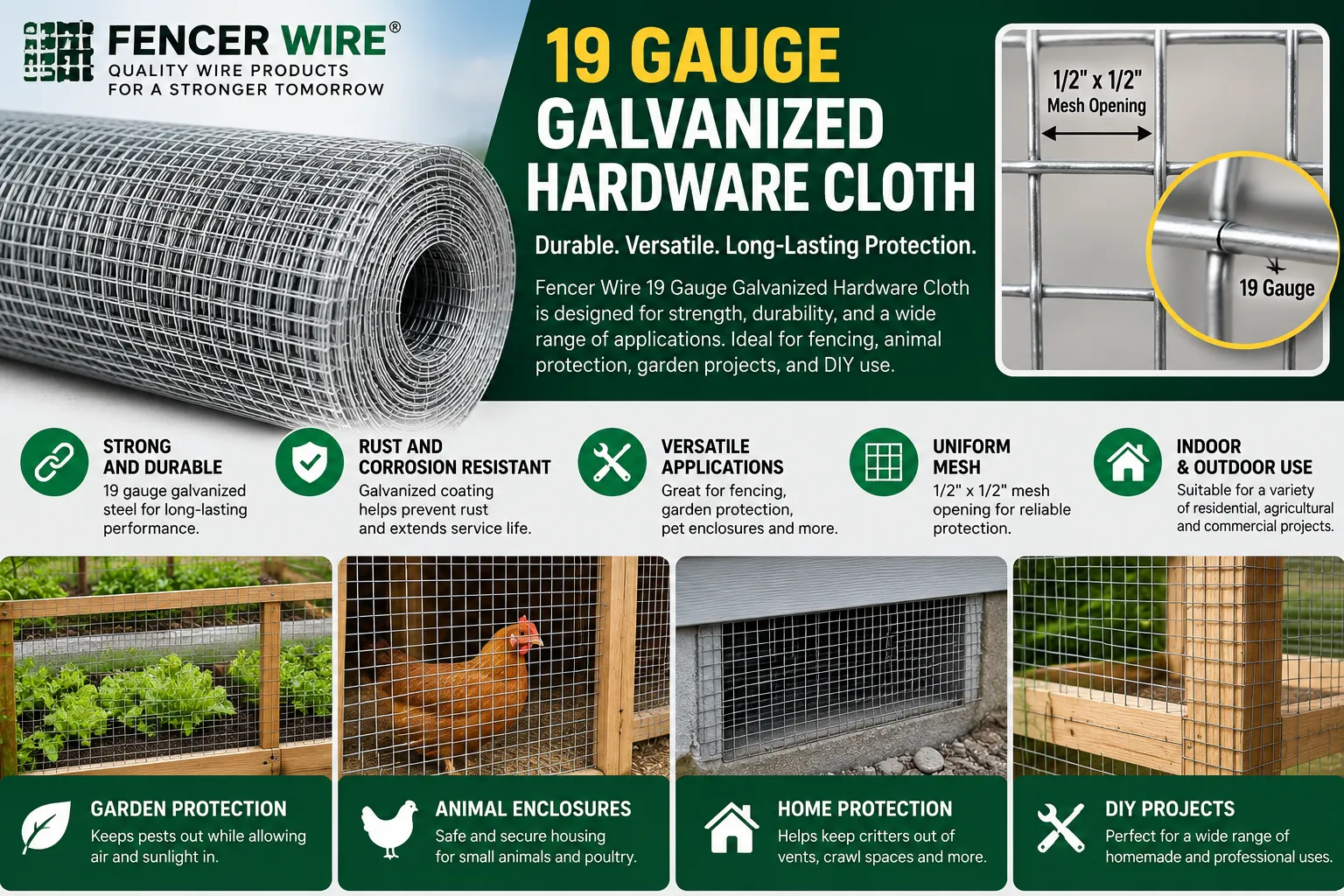
Fencer Wire 19 Gauge Galvanized Hardware Cloth is a practical wire mesh solution for garden protection, animal enclosures, pest control, repairs, and many home projects. Its 19-gauge galvanized steel construction gives the mesh a sturdy feel, while the 1/2-inch square openings provide a useful balance between airflow and protection.
The mesh uses a hot-dipped galvanized finish with a double zinc coating designed to help resist rust. Fencer Wire lists this hardware cloth in several widths and lengths, making it suitable for both small DIY jobs and larger property projects.
Product Specifications at a Glance
| Specification | Details |
|---|---|
| Wire gauge | 19 gauge |
| Material | Galvanized steel |
| Mesh opening | 1/2 inch x 1/2 inch |
| Mesh shape | Square |
| Finish | Hot-dipped galvanized |
| Coating | Double zinc coating |
| Construction | Uniformly welded |
| Main uses | Garden protection, fencing, pest control, animal areas |
| Cutting method | Tin snips or suitable wire cutters |
| Available sizes | Multiple width and length combinations |
The exact size you need depends on the area, installation method, and amount of coverage required. Product listings show sizes ranging from compact 2 ft. x 5 ft. pieces to larger rolls reaching several feet in width and up to 100 ft. in length.
1. Garden Pest Protection
Gardeners can use this mesh around raised beds, flower beds, and planting areas. The 1/2-inch openings create a physical barrier against many small animals and crawling pests while still allowing sunlight, air, and water to reach plants.
A section of mesh can sit beneath a raised bed to discourage animals from reaching the roots from below. It can also form a protective wall around vegetables, herbs, flowers, and young plants.
Popular garden uses include:
- Raised-bed base protection
- Root-zone barriers
- Vegetable bed fencing
- Flower-bed protection
- Small animal barriers
- Tree protection
- Soil screening
Proper anchoring matters. Staples, screws with washers, landscape pins, or suitable fencing fasteners can help keep the mesh secure against movement.
2. Chicken Coop and Poultry Protection
A chicken enclosure needs more than a simple boundary. Small predators can enter through surprisingly narrow gaps, so a tighter mesh can provide a practical layer of protection.
The 1/2-inch mesh size works well for chicken runs, coop openings, ventilation areas, and lower sections of fencing. The galvanized surface also suits outdoor applications, particularly in areas exposed to moisture.
For poultry projects, homeowners can use the mesh for:
- Chicken run walls
- Coop ventilation openings
- Lower fence sections
- Small bird enclosures
- Brooder protection
- Predator barriers
The mesh should be fastened firmly along every edge. Gaps near corners, doors, and ground-level sections deserve extra attention.
3. Rabbit and Small Animal Enclosures
Rabbit owners can use hardware cloth for enclosure walls, floor barriers, and protected garden sections. The welded construction gives the mesh a consistent grid that works well for framed structures.
A wooden frame can provide the main structure, while galvanized mesh forms the protective surface. For ground applications, burying part of the mesh or extending it outward can help reduce digging access.
The same approach can work for selected small-animal spaces, provided the mesh size and wire gauge suit the animal.
4. Tree Guards and Plant Protection
Young trees can suffer from chewing, digging, and physical damage caused by animals. A simple cylindrical guard made from hardware cloth can create space between the plant and nearby pests.
To make a tree guard:
- Measure the area around the trunk.
- Cut a suitable section of mesh.
- Form the mesh into a loose cylinder.
- Secure the overlapping edges.
- Anchor the guard to stakes.
- Leave enough room for natural tree growth.
Avoid pressing the mesh tightly against the trunk. A little clearance helps prevent rubbing and gives the plant room to develop.
5. Gutter, Vent, and Opening Screens
Small openings around a home can become entry points for insects, rodents, leaves, and other unwanted material. Hardware cloth can work as a screening material for selected vents, gutter areas, under-eave openings, and similar spaces.
The mesh allows air and water movement while creating a physical barrier. A correctly measured piece can be trimmed to fit the opening and secured with appropriate fasteners.
For gutter applications, check the local climate and drainage needs before installation. Heavy debris buildup can reduce water flow, so regular inspection remains useful.
6. DIY Home and Property Projects
One reason this type of wire mesh suits DIY work is its ability to be cut, folded, and shaped. Fencer Wire states that its hardware cloth can be cut with tin snips and molded for project-specific applications.
Homeowners can use it for:
- Compost bin sides
- Small storage screens
- Drain covers
- Window protection
- Screen-door repairs
- Soil sifters
- Under-deck barriers
- Garden dividers
- Vent covers
- Custom protective panels
A pair of quality gloves should be part of the basic setup. Cut wire can have sharp edges, so folded edges or protective edging can make the finished project safer to handle.
7. Soil Sifting and Garden Preparation
Hardware cloth can also serve as a simple soil sifter. A wooden frame fitted with mesh creates a reusable screen for separating stones, roots, clumps, and larger debris from garden soil.
The 1/2-inch grid suits many basic gardening tasks. For finer screening, gardeners may prefer a smaller mesh size.
A basic soil sifter requires:
- A wooden frame
- A suitable section of hardware cloth
- Screws or staples
- Wire cutters
- Protective gloves
Stretch the mesh across the frame and secure every side firmly. A rigid frame makes repeated sifting easier and gives the screen a stable working surface.
Why 19 Gauge and 1/2-Inch Mesh Work Well Together
Wire gauge and mesh opening both affect how a hardware cloth performs. A 19-gauge wire provides a fairly sturdy material for common residential and garden projects, while the 1/2-inch openings create a relatively tight grid.
| Feature | Practical benefit |
|---|---|
| 19-gauge wire | Suitable for many garden and enclosure projects |
| 1/2-inch openings | Helps restrict access for many small pests |
| Galvanized finish | Helps protect steel from corrosion |
| Welded grid | Provides consistent square openings |
| Flexible sheet | Can be shaped around frames and structures |
| Multiple roll sizes | Fits compact and larger projects |
Home Depot also lists the product as galvanized, double zinc-coated, uniformly welded, and suitable for fencing, pest control screens, and related applications.
Cutting and Installation Tips
Working with galvanized hardware cloth becomes easier with the right preparation. Measure the installation area first, then add a small allowance for fastening and overlap.
Useful tools may consist of:
- Tin snips
- Heavy-duty wire cutters
- Work gloves
- Pliers
- Staple gun
- Screws and washers
- Fence staples
- Measuring tape
After cutting, inspect the edges carefully. Bend exposed points inward or cover them with suitable edging. For outdoor projects, attach the mesh at frequent intervals so loose sections do not sag or flap.
For animal areas, inspect the perimeter after installation. Small gaps can reduce the effectiveness of a protective barrier.
Selecting the Right Roll Size
Fencer Wire lists multiple size combinations, so buyers can select a roll based on the coverage area. Smaller pieces may suit repairs, tree guards, and compact garden projects. Larger rolls make more sense for chicken runs, garden boundaries, under-deck barriers, and repeated DIY work.
Before ordering, calculate:
Required area = width × length
Add extra material for overlaps, corners, trimming, and fastening. Buying a little extra can prevent a second purchase for a small uncovered section.
Maintenance Tips for Outdoor Use
Galvanized steel needs relatively simple care, yet periodic inspection can help preserve a finished installation.
Check for:
- Loose fasteners
- Bent sections
- Sharp exposed edges
- Damaged welds
- Soil buildup
- Animal-created gaps
- Areas with visible corrosion
Remove dirt and debris from exposed sections as needed. Replace badly damaged portions rather than leaving an opening that could compromise a fence, garden barrier, or enclosure.
Final Thoughts
Fencer Wire 19 Gauge Galvanized Hardware Cloth provides a flexible material for gardening, fencing, animal areas, pest barriers, repairs, and household DIY work. Its 19-gauge galvanized steel, 1/2-inch square mesh, welded construction, and range of available sizes make it suitable for many practical projects.
The right size depends on the job, coverage area, and installation method. Measure carefully, use suitable cutting tools, protect your hands, and secure every edge properly. With thoughtful installation, this hardware cloth can serve as a useful material for projects around gardens, coops, trees, decks, vents, and other parts of a property.