
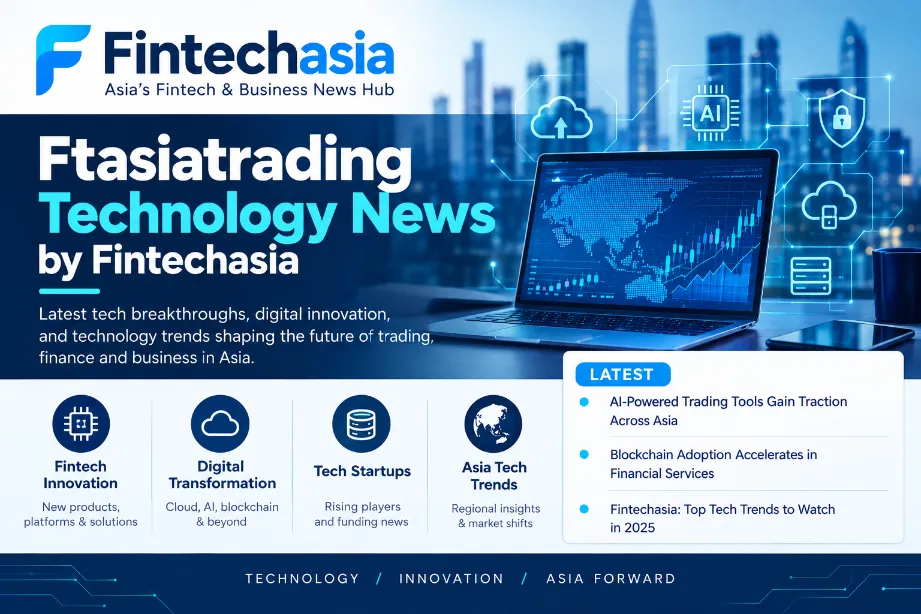
Ftasiatrading Technology News by Fintechasia focuses on technology connected with digital finance, trading systems, fintech services, artificial intelligence, blockchain, online payments, cybersecurity, and financial software. The topic brings together two rapidly changing fields: financial technology and online trading.
Readers usually look for information about trading platforms, software updates, AI tools, security systems, payment technology, digital banking, and financial applications. These areas affect both individual traders and companies that use digital financial services.
What Ftasiatrading Technology News Covers
FTAsiaTrading-related technology coverage can connect with several areas of modern financial technology. These subjects range from automated trading systems and artificial intelligence to blockchain, cybersecurity, and digital payment solutions.
Common subjects connected with the phrase are:
- Artificial intelligence for financial services
- Automated trading software
- Blockchain systems
- Digital payment technology
- Cybersecurity
- Financial data analytics
- Mobile trading applications
- Cloud-based financial software
- API technology
- Regulatory technology
- Digital banking
- Cryptocurrency infrastructure
These areas give readers a broader view of the role software has in trading and financial services.
Main Technology Areas
| Technology area | What it does | Value for users |
|---|---|---|
| Artificial Intelligence | Processes large financial datasets | Faster analysis |
| Machine Learning | Finds patterns within historical data | Supports research |
| Blockchain | Records transactions through distributed systems | Greater transaction visibility |
| APIs | Connects financial applications | Easier software integration |
| Cloud Computing | Runs applications through remote infrastructure | Flexible access |
| Cybersecurity | Protects accounts and financial information | Better account safety |
| Data Analytics | Converts raw information into useful reports | Better market research |
| Automation | Handles repetitive digital tasks | Saves manual effort |
Artificial Intelligence in Financial Technology
AI has a major role in modern fintech. Financial platforms can use machine learning models to process large datasets, detect unusual activity, classify transactions, and produce analytical signals.
AI-based systems can process information at high speed. A trader may use software to compare historical prices, market activity, volatility, and other data points through one interface.
Some AI applications in financial technology are:
- Fraud detection
- Market-data analysis
- Automated customer support
- Risk assessment
- Transaction monitoring
- Portfolio analysis
- Document processing
- Trading signal generation
AI tools still require human review. A software-generated signal cannot guarantee a profitable trade. Users should review the data, strategy, and potential risk before taking action.
Automated Trading Technology
Automation has changed how many traders interact with financial markets. Trading software can follow predefined rules and send orders after selected conditions appear.
For example, a strategy may use price levels, volume, volatility, or technical indicators to trigger an action. Automated systems can also reduce repetitive manual work.
Important components may consist of:
- Order management systems
- Trading APIs
- Algorithmic strategies
- Risk controls
- Market-data feeds
- Automated alerts
- Backtesting tools
A reliable automated setup needs suitable market data, careful testing, account protection, and appropriate risk limits.
Blockchain and Digital Finance
Blockchain technology forms another major part of the fintech sector. It provides a distributed method for recording transactions and can support digital assets, payment networks, tokenized products, and other financial applications.
For trading technology, blockchain can support:
- Digital asset transactions
- Tokenized financial products
- Decentralized applications
- Transaction records
- Digital payment networks
- Smart-contract systems
Blockchain does not remove financial risk. Digital assets can experience sharp price movements, so users should review the legal, financial, and security conditions of a service before committing funds.
Mobile Trading Technology
Mobile access has changed how users monitor financial markets. Modern financial applications can provide charts, alerts, account information, order tools, and market data through smartphones.
A useful mobile trading application may offer:
- Real-time notifications
- Portfolio monitoring
- Price alerts
- Secure login
- Trading charts
- Order management
- Account activity
- Market news
Mobile access gives users more flexibility, but device security remains important. Strong passwords, biometric protection, and updated software can reduce security risks.
Cybersecurity and Account Protection
Financial technology requires strong security because trading accounts may contain money, personal information, transaction records, and other sensitive data.
Security measures may cover:
- Multi-factor authentication for additional login protection.
- API permissions that restrict software access.
- Session controls that reduce unauthorized account access.
- Encryption for sensitive information.
- Login alerts that notify users about unusual activity.
- Device protection through updated operating systems and security software.
Users should never share passwords or API credentials with unknown parties. API access should receive only the permissions required for its intended purpose.
Data Analytics for Traders
Financial data helps traders study price movements, trading volume, volatility, and market behavior. Analytics software brings multiple datasets together and presents them through charts, dashboards, reports, and indicators.
A trader may review:
- Price history
- Trading volume
- Volatility
- Market depth
- Performance records
- Portfolio allocation
- Transaction history
- Risk exposure
Good analytics can improve research quality, but historical data cannot guarantee future market results.
Digital Payments and Fintech
Fintech extends beyond trading. Digital payment systems have changed how consumers and companies transfer money, purchase products, receive payments, and manage financial accounts.
Modern fintech services may provide:
- Mobile wallets
- Instant payment systems
- Digital banking
- Online transfers
- QR payments
- Payment gateways
- Cross-border payment services
These systems can make transactions easier and give businesses more options for receiving customer payments.
Regulatory Technology
RegTech uses software to help financial companies manage compliance tasks. Automated systems can monitor transactions, organize records, verify customers, and prepare reports.
Common RegTech functions include:
| Function | Purpose |
|---|---|
| KYC | Customer identity verification |
| AML monitoring | Detection of suspicious transactions |
| Audit records | Maintenance of transaction information |
| Reporting tools | Preparation of compliance reports |
| Risk monitoring | Review of potential financial risks |
| Data controls | Management of sensitive customer information |
Rules differ between countries, so financial companies need to review the regulations that apply to their operations.
Why Technology News Matters for Traders
Technology changes can affect the way traders access markets and manage accounts. A software update may add new order functions, improve charting, change API behavior, or add new security controls.
Readers can monitor areas such as:
- New financial software
- Platform updates
- AI developments
- Security improvements
- Payment technology
- Blockchain projects
- Trading infrastructure
- Regulatory software
Technology news works best as a research resource rather than a direct instruction to buy or sell an asset.
How to Evaluate FTAsiaTrading Technology Information
Several websites may use similar FTAsiaTrading titles and descriptions. This can make source verification useful for readers who want to learn more about a platform, company, technology product, or trading service.
A simple verification process can help:
- Check the original publisher.
- Look for official company information.
- Verify financial claims through reliable records.
- Check regulatory status before using a trading service.
- Avoid relying on profit promises.
- Review security information before connecting an account.
- Compare claims with independent financial sources.
A professional-looking website alone does not prove that a trading service has regulatory approval or a reliable operating record.
FintechAsia and Technology Coverage
FintechAsia covers subjects related to fintech, digital business, financial services, and technology. Its broader technology themes can connect with artificial intelligence, blockchain, digital finance, cybersecurity, and other areas of the modern technology sector.
The phrase Ftasiatrading Technology News by Fintechasia may also appear on third-party websites. Readers should distinguish between original publisher material and pages that reuse similar titles or descriptions.
This distinction helps users assess the source before relying on information related to financial platforms or trading technology.
Benefits of Following Financial Technology Updates
Regular technology updates can help traders and businesses stay aware of software changes and new digital tools.
Potential benefits include:
- Better awareness of new trading features
- More knowledge about cybersecurity
- Easier evaluation of financial software
- Awareness of payment innovations
- Better preparation for software changes
- More knowledge about AI applications
- Greater awareness of regulatory technology
Technology news can provide useful research material, but financial decisions should also rely on risk assessment and reliable financial information.
What Traders Should Check Before Using a Platform
Before depositing money or connecting an automated system, users should review the service carefully.
| Check | Why it matters |
|---|---|
| Company information | Helps verify the operator |
| Regulatory status | Shows applicable oversight |
| Security options | Protects account access |
| Fees | Helps calculate trading costs |
| Withdrawal rules | Clarifies access to funds |
| API permissions | Limits automated account access |
| Privacy policy | Shows data handling practices |
| Customer support | Provides help during account problems |
A polished website does not automatically prove that a financial platform is trustworthy. Company information, regulatory records, security measures, fees, and withdrawal policies deserve careful review.
Future of Financial Technology
Financial technology will likely expand across AI, digital payments, blockchain, cloud infrastructure, automation, and cybersecurity. Trading platforms may add more analytical tools and automated functions as computing technology develops.
Software can handle more routine tasks, process larger datasets, and provide faster access to financial information. At the same time, security, transparency, regulatory compliance, reliable infrastructure, and responsible data use remain important for the sector.
Ftasiatrading Technology News by Fintechasia fits within the wider discussion surrounding trading technology and fintech innovation. Readers can use the topic to learn about digital finance, but they should verify platform-specific claims before making financial decisions or sharing account information.
Final Thoughts
Financial technology connects trading, payments, data analytics, AI, blockchain, automation, and cybersecurity. FTAsiaTrading-related searches bring attention to many of these areas, while FintechAsia covers broader fintech and technology subjects.
For traders, the most useful approach combines technology updates with independent research, platform verification, security checks, and careful risk management. Software can improve access to information and automate routine tasks, but financial decisions still require personal judgment and appropriate risk controls.