
Yes, a hotel jacuzzi can add comfort after a long day of walking, sightseeing, or travel. Warm water may help tired muscles loosen and can make an evening feel more restful.
Before using it, check the tub itself rather than relying only on the room description. A clean-looking surface does not prove that the water meets a safe hygiene standard.
Look for:
- Clear water with no unusual color
- A mild chemical smell rather than a harsh odor
- A clean shell, headrest, and waterline
- Working jets with no visible residue
- A clean filter area
- Fresh towels nearby
- Easy-to-use controls
- Clear maintenance information from the property
A private jacuzzi gives you more control over the setting, while a shared spa tub calls for extra care.
Is a Jacuzzi Safe to Use?
For most healthy adults, a properly maintained jacuzzi can suit short sessions. Heat can raise body temperature, increase sweating, and leave you light-headed after a long soak.
Keep the session moderate and drink water before and after use.
A simple safety checklist:
- Keep the water at a comfortable temperature.
- Limit long soaking sessions.
- Drink water before entering.
- Leave the tub straight away after dizziness, nausea, unusual weakness, or breathing discomfort.
- Avoid mixing a hot soak with alcohol.
- Keep children away from water that feels too hot for them.
- Follow the property’s temperature guidance.
- Follow the tub manufacturer’s safety instructions.
Pregnant guests and anyone with a heart or circulation condition should ask a healthcare professional about suitable water temperature and session length.
What Temperature Should a Jacuzzi Have?
Many residential and hotel hot tubs operate around 100°F to 104°F, or about 38°C to 40°C. A lower setting can feel more comfortable during a longer session, especially in a warm room or hot outdoor weather.
| Water temperature | General use |
|---|---|
| 98°F–99°F (37°C–37.2°C) | Mild warmth |
| 100°F–102°F (37.8°C–38.9°C) | Comfortable soaking range |
| 103°F–104°F (39.4°C–40°C) | Very warm; keep sessions shorter |
| Above 104°F | Avoid unless qualified medical or manufacturer guidance supports it |
Temperature alone does not tell you that a jacuzzi is safe. Water quality, equipment condition, cleanliness, and personal health all carry weight.
How Long Should I Stay in a Jacuzzi?
A 15-to-20-minute session works well for many adults. A shorter period may suit a very warm tub, a first session, or anyone who feels uncomfortable with heat.
Do not treat a jacuzzi session like an endurance test. The goal should be comfort, not staying in the water for as long as possible.
After leaving the tub, cool down gradually and drink water. Sit for a few minutes before heading outside, especially after a very warm soak.
Can a Jacuzzi Help Tired Muscles?
Warm water can feel soothing after travel, exercise, or a long day on your feet. Buoyancy also reduces the load your body feels from gravity, while water jets can provide a gentle massage sensation.
A jacuzzi may feel useful after:
- Long flights or road trips
- Walking-heavy vacations
- Gym sessions
- Hiking
- Long workdays
- General muscle stiffness
A jacuzzi should not replace medical care for severe or persistent pain. Sudden pain, swelling, weakness, or an injury deserves proper medical attention.
Should I Use a Hotel Jacuzzi After Drinking?
It is better to skip a hot jacuzzi after drinking alcohol. Alcohol can contribute to dehydration and can affect balance, judgment, and blood pressure. Heat adds another stress on the body.
Choose water instead, give yourself time to recover, and use the tub later only after you feel fully normal.
This simple rule can make a hotel spa experience safer.
How Can I Check Jacuzzi Cleanliness?
Take a minute to inspect the tub before use. You do not need specialist equipment to spot several warning signs.
| Check | Good sign | Warning sign |
|---|---|---|
| Water | Clear | Cloudy or unusual color |
| Odor | Mild chemical smell | Very strong chemical or musty smell |
| Shell | Smooth and clean | Slime, film, or visible residue |
| Jets | Clean water flow | Debris or buildup |
| Surrounding area | Dry and tidy | Dirty, wet, or poorly maintained |
| Controls | Clean and functional | Sticky, damaged, or dirty |
A strong chemical smell does not automatically mean the water has more sanitizer. It can point to poor water balance or contamination. Visible dirt, floating debris, or a slimy surface deserves caution.
Is a Private Jacuzzi Better Than a Shared Jacuzzi?
A private tub offers more privacy and may feel more comfortable, but privacy does not guarantee cleaner water. A shared tub may receive heavier use, so hygiene checks deserve extra care.
For a hotel or rental stay, ask the property about:
- Cleaning between guests
- Water treatment
- Filter maintenance
- Temperature control
- Drain and refill practices
- Guest-use rules
A property that gives clear maintenance information can make the decision easier.
What to Take to a Jacuzzi
You need very little for a short soak. Pack practical items rather than filling your bag with extras.
Useful items:
- Clean swimwear
- Flip-flops or water-safe sandals
- A water bottle
- A towel
- A robe for cooler areas
- A waterproof phone pouch, provided the property permits phone use
- Hair ties for longer hair
Avoid glass containers around the tub. Broken glass can create a serious hazard in a wet area.
Should I Use Jacuzzi Traplestour During a Vacation?
A jacuzzi can fit nicely into a vacation routine, especially after activities that leave you tired. The best use comes from keeping the session simple: hydrate, check the water, choose a comfortable temperature, soak for a moderate period, then rest.
For a busy travel schedule, a short evening soak may feel better than a long session that leaves you overheated. The same approach works for a hotel jacuzzi, resort spa, private rental, or home tub.
Who Should Be More Careful With Jacuzzi Use?
Heat affects the body, so some guests need medical advice before using a hot tub.
Extra caution applies to:
- Pregnant guests
- Children
- Older adults with heat sensitivity
- Anyone with heart disease
- Anyone with blood-pressure concerns
- Anyone taking medicine that affects blood pressure or heat regulation
- Anyone with an open wound or active skin infection
A healthcare professional can give advice based on your personal situation and medications.
Jacuzzi Benefits and Drawbacks
| Benefits | Drawbacks |
|---|---|
| Warm water can relax tired muscles | Heat can cause dizziness |
| Jets can provide a massage-like sensation | Poor water care can create hygiene concerns |
| Can make a hotel stay more relaxing | Shared tubs may have heavy guest use |
| Useful after walking or travel | Long sessions may cause overheating |
| Private tubs offer more privacy | Maintenance quality varies by property |
The best choice depends on the condition of the tub, your comfort with heat, and your personal health.
Common Jacuzzi Mistakes to Avoid
Several small mistakes can turn a pleasant soak into an uncomfortable experience.
- Entering without checking the water
- Staying in too long
- Drinking alcohol during a hot soak
- Forgetting to hydrate
- Using a tub with visible residue
- Ignoring dizziness or nausea
- Setting the temperature too high
- Allowing children to use an adult-temperature tub
- Taking glass containers into the spa area
- Using a jacuzzi despite an open wound or skin infection
A little care before entry can make the experience far more comfortable.
Jacuzzi vs Regular Bath
A regular bath gives you a quiet, controlled soak without shared equipment or jets. A jacuzzi adds water movement, massage-style jets, and a more social or recreational setting.
| Feature | Jacuzzi | Regular bath |
|---|---|---|
| Water jets | Yes | Usually no |
| Shared use | Possible | Usually private |
| Temperature control | Usually available | Usually available |
| Massage sensation | Stronger | Gentle |
| Maintenance | More demanding | Simpler |
| Travel setting | Common at hotels and resorts | Less common as a special amenity |
For simple relaxation, a bath may be enough. For hydrotherapy-style comfort and a spa atmosphere, a jacuzzi may offer more.
Should I Use Jacuzzi Traplestour Before Bed?
A warm soak may help you settle into a bedtime routine, especially after a busy day. Keep the session moderate and give your body time to cool after leaving the tub.
Avoid going straight from very hot water into bed. A brief cool-down period can make the transition more comfortable.
A Dirty Jacuzzi: What to Do
Skip it and contact the hotel, host, spa staff, or property manager. Ask for the tub to receive an inspection and cleaning before use.
Do not try to fix questionable water by adding your own chemicals. Different sanitation systems require specific products and quantities, and the wrong treatment can create another problem.
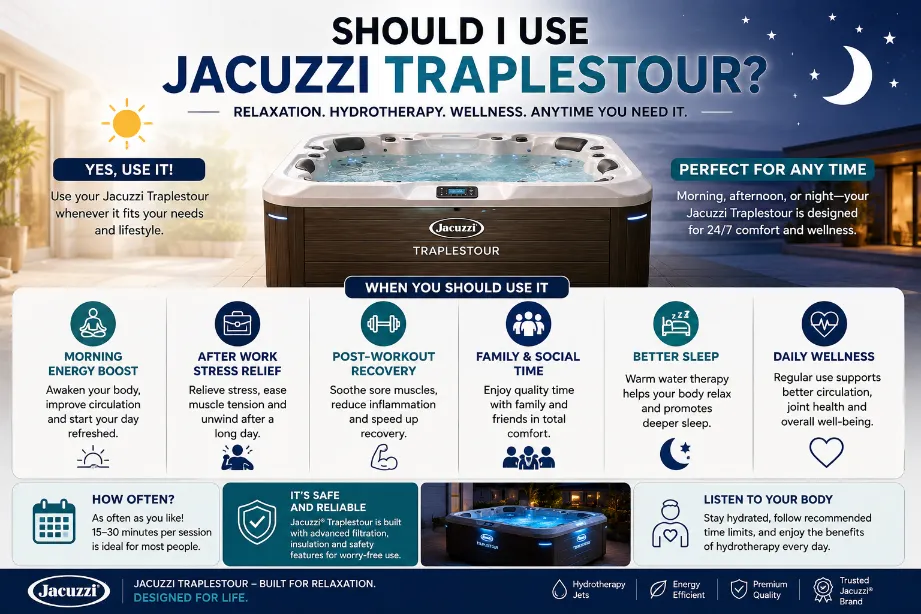
Final Verdict: Should I Use Jacuzzi Traplestour?
Yes, a jacuzzi can be worth using during a hotel stay, vacation, spa visit, or home routine, provided the tub looks clean, the water seems properly maintained, and the temperature suits you.
For the best experience:
- Inspect the tub before entry.
- Choose a moderate temperature.
- Keep your session reasonably short.
- Drink water.
- Skip alcohol around hot-tub use.
- Leave the water at the first sign of dizziness or discomfort.
- Follow property rules and manufacturer guidance.
- Get medical advice for personal health concerns.
A jacuzzi should leave you feeling relaxed and comfortable, not drained or unwell. A few sensible checks can help you enjoy the experience with much less worry.
Can I use a jacuzzi every day?
Healthy adults may use a well-maintained jacuzzi regularly, but session length and water temperature matter. Short, comfortable sessions are preferable to prolonged exposure.
Is 104°F too hot for a jacuzzi?
104°F sits at the upper end of the common hot-tub temperature range. Many adults should keep sessions shorter at this temperature and monitor how their body responds.
Can I use a jacuzzi after exercise?
A warm soak may feel soothing after exercise and can help relax tired muscles. Drink enough water and give your body time to settle after intense activity.
Can I use a hotel jacuzzi alone?
A private tub can offer a peaceful experience, but avoid risky behavior such as prolonged exposure, excessive heat, or alcohol use. Keep your phone or another means of contacting staff nearby during a hotel stay.
How do I know a jacuzzi needs cleaning?
Cloudy water, visible debris, slime, residue, or an unusually strong odor can signal a maintenance problem. Contact staff rather than attempting your own chemical treatment.
Can children use a jacuzzi?
Children need extra care around hot water. Adult-temperature settings may be too hot for young users. Follow the tub manufacturer’s age and temperature guidance and supervise children closely.
Is a jacuzzi good for relaxation?
Warm water and jets can create a soothing experience and may help relax tired muscles. A moderate temperature, short session, quiet setting, and good hydration can make the experience more comfortable.
Should I Use Jacuzzi Traplestour at a hotel?
You can, provided the tub appears clean, the water quality seems acceptable, the temperature feels suitable, and you have no personal health reason to avoid hot-water exposure. A quick inspection before entry can help you make a better decision.