
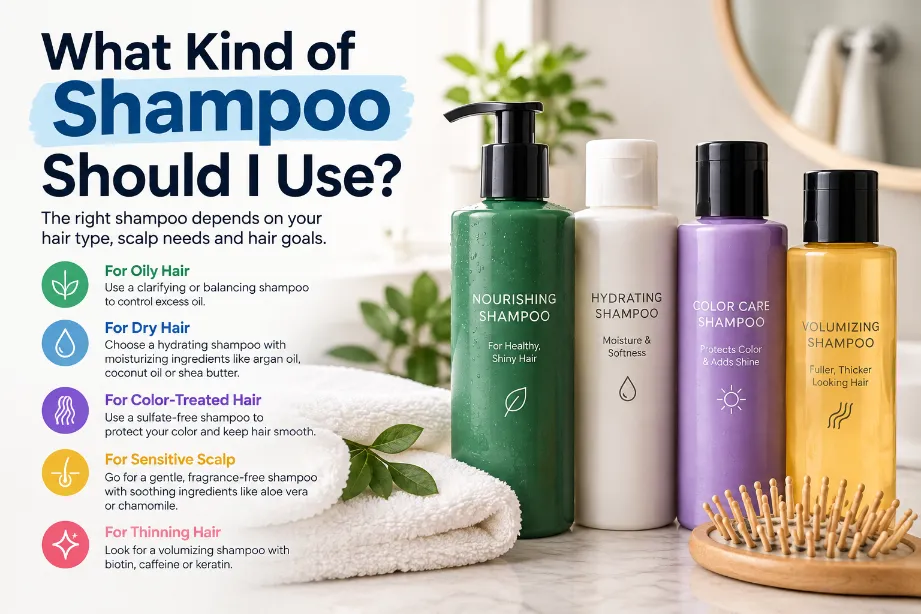
The right shampoo depends on your hair type, scalp condition, hair texture, styling routine, and main hair concern. A shampoo made for oily roots may leave dry curls rough, while a rich moisturizing formula may make fine hair feel heavy.
Start with your scalp and hair needs rather than picking shampoo based only on fragrance, packaging, or marketing claims.
Shampoo for Oily Hair and Scalp
An oily scalp can make hair look greasy soon after washing. A lightweight shampoo can remove excess oil without leaving a heavy coating.
Look for ingredients such as:
- Salicylic acid
- Tea tree oil
- Zinc compounds
- Gentle cleansing agents
- Green tea extracts
- Clay-based formulas
A clarifying shampoo can help after heavy styling-product use, but frequent use may leave some hair dry. For regular washing, choose a gentle formula made for oily scalps.
Shampoo for Dry Hair
Dry hair needs moisture and a mild cleansing formula. Strong cleansing agents can make already-dry strands feel rough, brittle, or tangled.
Look for shampoo with:
- Argan oil
- Coconut oil
- Shea butter
- Aloe vera
- Glycerin
- Ceramides
- Hyaluronic acid
A moisturizing shampoo works well alongside a nourishing conditioner. Wash with lukewarm water rather than very hot water, since high heat can strip moisture from the hair and scalp.
Shampoo for Curly Hair
Curly hair can lose moisture easily, so a gentle shampoo can help maintain softness and curl shape.
Look for:
- Sulfate-free formulas
- Moisturizing ingredients
- Lightweight oils
- Aloe vera
- Shea butter
- Coconut-derived cleansers
A low-lather or sulfate-free shampoo may suit curls that feel dry after regular washing. Avoid formulas that leave curls stiff or squeaky after rinsing.
Shampoo for Fine or Thin Hair
Fine hair can become flat under heavy formulas. A lightweight volumizing shampoo may help hair feel cleaner and fuller without adding excess weight.
Useful ingredients may include:
- Rice protein
- Hydrolyzed wheat protein
- Niacinamide
- Panthenol
- Lightweight botanical extracts
Apply shampoo mainly to the scalp and roots. Allow the rinse water to carry the product through the lengths rather than applying a large amount directly to the ends.
Shampoo for Thick Hair
Thick hair can handle richer formulas, especially with dry or coarse strands. A moisturizing shampoo can make the hair easier to manage and reduce a rough feel.
Look for:
- Shea butter
- Argan oil
- Coconut oil
- Avocado oil
- Ceramides
- Glycerin
Massage the scalp with your fingertips and rinse thoroughly. Thick hair may need extra rinsing so product residue does not remain near the roots.
Shampoo for Frizzy Hair
Frizz can come from dryness, humidity, heat styling, chemical treatments, or damaged cuticles. A smoothing shampoo can help hair feel softer and easier to style.
Look for:
- Argan oil
- Keratin
- Amino acids
- Ceramides
- Coconut-derived moisturizers
- Glycerin
Pairing shampoo with conditioner and a leave-in product can provide better results than relying on shampoo alone.
Shampoo for Damaged or Bleached Hair
Bleaching, coloring, heat styling, and chemical treatments can weaken the hair shaft. A gentle repair-focused shampoo can help reduce roughness and improve manageability.
Useful ingredients include:
- Bond-building ingredients
- Keratin
- Amino acids
- Ceramides
- Plant oils
- Protein-based ingredients
Use less heat, reduce aggressive brushing, and apply conditioner after washing. Hair that feels extremely brittle may also benefit from fewer chemical treatments.
Shampoo for Dandruff
Dandruff needs a different approach from ordinary dry scalp. Anti-dandruff shampoos may contain active ingredients that target flakes and scalp irritation.
Common options include:
- Ketoconazole
- Zinc pyrithione
- Selenium sulfide
- Salicylic acid
- Coal tar
Follow the directions printed on the product. Give the shampoo enough contact time on the scalp before rinsing, based on the label instructions.
Persistent flaking, redness, pain, thick scaling, or scalp sores deserve medical advice from a dermatologist.
Shampoo for Sensitive Scalp
A sensitive scalp may react to fragrance, dyes, strong cleansing agents, or certain preservatives. A simple formula with fewer potential irritants may feel more comfortable.
Look for:
- Fragrance-free formulas
- Mild cleansers
- Short ingredient lists
- Soothing ingredients such as aloe vera
- Products made for sensitive scalps
Stop using a product that causes burning, swelling, severe itching, or a rash. Medical advice can help identify the cause of repeated scalp reactions.
Shampoo for Color-Treated Hair
Colored hair needs gentle cleansing to help maintain its appearance for longer. Very strong cleansing can remove oils and may make the hair feel dry.
Look for:
- Sulfate-free formulas
- Moisturizing ingredients
- Color-care formulas
- UV-protective hair products
- Low-irritant formulas
Cooler water can also help reduce dryness during washing. Limit frequent hot-water washes and excessive heat styling.
Shampoo for Gray or Silver Hair
Purple shampoo can help reduce unwanted yellow or brassy tones in blonde, gray, white, or highlighted hair. It does not provide the same cleansing role as an everyday shampoo.
Use it according to the product directions. Excessive use may leave some hair with a purple or dull appearance.
Shampoo for Men
Men can use shampoo based on scalp and hair needs rather than gender labels. Oily scalps may need an oil-control formula, while dry or curly hair may need more moisture.
For short hair, a simple gentle shampoo may work well. Longer hair, curls, color treatments, or scalp concerns may require a more specialized formula.
Shampoo for Children
Children generally need mild hair products made for young scalps. Look for gentle cleansing agents and formulas designed for their age group.
Avoid adult treatment shampoos unless a healthcare professional recommends one. A child’s scalp may react differently to strong active ingredients.
Shampoo Type by Hair Concern
| Hair or scalp concern | Shampoo type to consider | Ingredients to look for |
|---|---|---|
| Oily scalp | Oil-control or balancing | Salicylic acid, zinc, tea tree |
| Dry hair | Moisturizing | Shea butter, glycerin, argan oil |
| Curly hair | Gentle moisturizing | Aloe, oils, sulfate-free cleansers |
| Fine hair | Lightweight volumizing | Rice protein, panthenol |
| Thick hair | Nourishing | Shea butter, avocado oil, ceramides |
| Frizzy hair | Smoothing | Keratin, amino acids, argan oil |
| Damaged hair | Repair-focused | Keratin, amino acids, bond-building ingredients |
| Dandruff | Anti-dandruff | Ketoconazole, selenium sulfide, salicylic acid |
| Sensitive scalp | Fragrance-free gentle | Mild cleansers, soothing ingredients |
| Color-treated hair | Color-care | Gentle cleansers, moisturizing agents |
| Gray or silver hair | Purple toning | Purple pigments |
How to Pick Shampoo for Your Hair Type
Use these steps before buying a new shampoo:
- Check your scalp: Decide whether it feels oily, dry, flaky, itchy, or balanced.
- Check your strands: Look at texture, thickness, dryness, breakage, and curl pattern.
- Identify your main concern: Focus on one primary issue rather than buying several treatment products at once.
- Read the ingredient list: Search for ingredients suited to your scalp and hair needs.
- Consider your washing routine: Frequent washing calls for a gentle formula for many hair types.
- Watch how your hair reacts: Excessive dryness, residue, itching, or greasiness can signal that the formula does not suit you.
How Much Shampoo Should I Use?
More shampoo does not automatically mean cleaner hair. A small amount can be enough for short or fine hair, while longer or thicker hair may need a little more.
A useful starting point:
- Short hair: about a nickel-sized amount
- Medium-length hair: about a quarter-sized amount
- Long or thick hair: adjust upward as needed
Focus the shampoo on the scalp. The lengths usually need less direct cleansing.
How Frequently Should You Shampoo?
Your washing schedule depends on oil production, hair texture, exercise, styling products, and personal comfort.
| Hair or scalp type | Possible washing schedule |
|---|---|
| Very oily scalp | Daily or every other day |
| Normal scalp | Every 2–3 days |
| Dry hair | 1–3 times per week |
| Curly or coily hair | Around 1–2 times per week |
| Fine hair | Based on oil buildup |
| Dandruff-prone scalp | Follow the active shampoo directions |
These ranges can vary from one person to another. Hair that feels greasy or has visible product buildup may need more frequent washing. Hair that feels rough or brittle may benefit from less frequent cleansing.
Shampoo Ingredients Worth Looking For
Different ingredients serve different purposes. A simple ingredient check can make shopping easier.
- Glycerin: Helps attract moisture.
- Ceramides: Support the hair’s protective barrier.
- Keratin: Adds conditioning support to damaged-feeling hair.
- Salicylic acid: Helps loosen scalp buildup and flakes.
- Ketoconazole: Used in some anti-dandruff treatments.
- Zinc pyrithione: Found in some dandruff formulas.
- Panthenol: Adds softness and moisture.
- Argan oil: Helps dry hair feel smoother.
- Aloe vera: Offers a soothing, lightweight feel.
- Protein: Can help improve the feel of weak or damaged strands.
Shampoo Ingredients to Use With Care
Some formulas may feel too harsh for certain scalps or hair types. A reaction depends on the individual formula and your personal tolerance.
Pay attention to:
- Strong fragrance
- High levels of drying alcohols
- Very strong cleansing agents
- Heavy silicones on hair prone to buildup
- Active dandruff ingredients used too frequently
- Essential oils on highly reactive scalps
A product can work well for one hair type and feel unsuitable for another.
Shampoo and Conditioner: Do You Need Both?
Shampoo mainly cleans the scalp and hair. Conditioner adds softness, slip, and moisture to the strands.
For dry, curly, coarse, damaged, or long hair, conditioner can make detangling easier. Fine or oily hair may need a lighter conditioner applied mainly to the ends.
A simple routine can look like this:
- Shampoo the scalp.
- Rinse thoroughly.
- Apply conditioner to the lengths and ends.
- Leave it on for the recommended time.
- Rinse well.
Signs Your Shampoo May Not Suit You
Your hair can give useful clues after several washes. Watch for:
- Scalp itching
- Burning or redness
- Excessive dryness
- Hair that feels coated
- Heavy roots
- Increased tangling
- Rough ends
- Flakes that become worse
- Hair that looks greasy soon after washing
A single wash may not tell you much, especially after changing several hair products at once. Keep your routine consistent so you can identify which product causes a change.
Best Shampoo for Your Hair: Simple Guide
The best shampoo for you depends on your scalp first and your hair length or texture second.
Oily scalp: Pick a lightweight oil-control shampoo.
Dry hair: Pick a moisturizing shampoo with ingredients such as glycerin, shea butter, or argan oil.
Curly hair: Pick a gentle, moisturizing, sulfate-free formula.
Fine hair: Pick a lightweight volumizing formula.
Thick or coarse hair: Pick a nourishing shampoo with richer conditioning ingredients.
Dandruff: Pick an anti-dandruff shampoo with an appropriate active ingredient.
Sensitive scalp: Pick a fragrance-free, mild formula.
Colored hair: Pick a gentle color-care shampoo.
Damaged hair: Pick a gentle repair-focused formula and reduce heat styling.
Final Shampoo Checklist
Before buying a bottle, check these points:
- Your scalp type
- Your hair texture
- Your main hair concern
- The active ingredients
- Fragrance level
- Moisturizing ingredients
- Your washing frequency
- Product buildup
- How your scalp reacts after washing
A shampoo does not need to be expensive to work well. The right formula should match your scalp and hair needs, feel comfortable during washing, and leave your hair clean without excessive dryness or residue.