
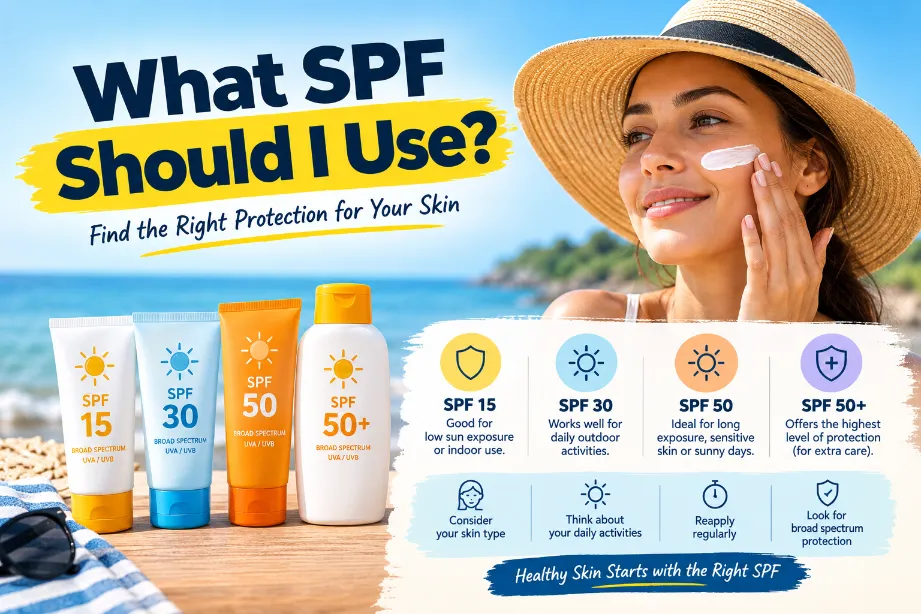
For everyday face and body protection, SPF 30 or higher is a solid starting point. Dermatologists also recommend a sunscreen labeled broad-spectrum and water resistant. Broad-spectrum products protect against UVA and UVB radiation, while water resistance helps during sweating or water exposure.
For long outdoor periods, beach days, sports, hiking, driving, or very sunny conditions, SPF 50 can be a practical choice. A higher SPF can provide additional UVB protection, but application amount and reapplication still matter.
| Daily situation | SPF to consider | Sunscreen features |
|---|---|---|
| Regular daily routine | SPF 30+ | Broad-spectrum |
| Outdoor work | SPF 50 | Broad-spectrum, water resistant |
| Beach or swimming | SPF 50 | Broad-spectrum, water resistant |
| Sports or heavy sweating | SPF 50 | Water resistant |
| Dark spots or melasma | SPF 30–50+ | Broad-spectrum, preferably tinted |
| Sensitive skin | SPF 30–50+ | Broad-spectrum, mineral options |
| High sun exposure | SPF 50+ | Broad-spectrum, water resistant |
The American Academy of Dermatology recommends SPF 30 or higher, broad-spectrum coverage, and water resistance for sunscreen users.
SPF 30 vs SPF 50
SPF measures protection against sunburn-producing UVB radiation. SPF 30 filters about 97% of UVB rays under laboratory testing conditions. No sunscreen blocks 100% of UVB radiation.
SPF 50 provides somewhat greater UVB protection than SPF 30, making it useful for extended outdoor exposure. The difference between the numbers can look small, but proper sunscreen use still matters more than simply picking the highest number on the shelf.
| SPF | Approximate UVB filtration | Best suited for |
|---|---|---|
| SPF 15 | 93% | Lower-level protection |
| SPF 30 | 97% | Everyday use |
| SPF 50 | Higher than SPF 30 | Longer outdoor exposure |
| SPF 100 | Very high UVB filtration | Special high-exposure needs |
For most routines, SPF 30+ is the dermatologist-recommended baseline. SPF 50 offers a useful extra margin for outdoor exposure.
Why Broad-Spectrum SPF Matters
SPF mainly describes protection against UVB radiation. UVA rays also reach the skin and contribute to premature skin aging and certain forms of skin damage.
A broad-spectrum sunscreen covers both UVA and UVB radiation. That makes the label more useful than an SPF number alone.
Look for these three terms on the bottle:
- Broad-spectrum
- SPF 30 or higher
- Water resistant
These three features form the basic sunscreen checklist recommended by dermatologists.
What SPF Should I Use for My Face?
For facial skin, SPF 30 or SPF 50 works well for daily use. SPF 50 may suit someone who spends more time outdoors, has a history of sun sensitivity, or wants stronger daily protection.
A facial sunscreen can also match your skin type:
- Oily skin: Lightweight gel, fluid, or non-comedogenic formulas can feel more comfortable.
- Dry skin: Cream-based sunscreen with moisturizing ingredients can work well.
- Sensitive skin: Mineral sunscreen containing zinc oxide or titanium dioxide may be a good option.
- Dark spots: A tinted broad-spectrum sunscreen containing iron oxide can offer additional protection against visible light, which can worsen pigmentation.
- Eye area: A sunscreen stick can make application around the eyes easier.
Your sunscreen should still carry SPF 30 or higher, broad-spectrum protection, and water resistance, regardless of texture.
What SPF Should I Use for Dark Skin?
Dark skin still needs sunscreen. Melanin offers some natural protection, but UV exposure can still contribute to pigmentation, premature skin aging, and skin cancer.
For daily use, SPF 30+ broad-spectrum sunscreen offers a strong starting point. SPF 50 can make sense for prolonged outdoor exposure.
For hyperpigmentation or melasma, a tinted sunscreen with iron oxide may offer an added advantage because visible light can worsen dark patches.
What SPF Should I Use for Sensitive Skin?
Sensitive skin can react to fragrance, certain preservatives, or particular sunscreen ingredients. Mineral formulas containing zinc oxide or titanium dioxide are commonly recommended for sensitive skin.
A simple sensitive-skin sunscreen checklist:
- SPF 30 or higher
- Broad-spectrum coverage
- Water resistance
- Fragrance-free formula
- Minimal irritating ingredients
- Zinc oxide or titanium dioxide for a mineral option
Patch testing a new product on a small area can help reduce the chance of an unpleasant reaction.
What SPF Should I Use for Oily or Acne-Prone Skin?
Oily skin does not require a lower SPF. SPF 30 or SPF 50 can work just as well as long as the formula feels comfortable enough for daily use.
Look for:
- Lightweight fluid or gel textures
- Non-comedogenic labeling
- Oil-free formulas
- Matte or natural-finish options
- Broad-spectrum SPF 30+
A sunscreen that feels heavy may make daily application less pleasant, so texture can matter just as much as the SPF number for long-term routine use.
What SPF Should I Use at the Beach?
Beach exposure can involve intense sunlight plus reflection from water and sand. A broad-spectrum, water-resistant SPF 50 is a practical choice for this setting.
Water resistance does not mean permanent protection. Sunscreens labeled water resistant generally provide either 40 or 80 minutes of water resistance, based on testing. Reapplication remains necessary after swimming, sweating, or towel drying.
For beach days, pair sunscreen with:
- A wide-brimmed hat
- UV-protective sunglasses
- Sun-protective clothing
- Shade
- Regular sunscreen reapplication
How Much Sunscreen Should I Apply?
Using too little sunscreen can reduce the protection promised on the label.
For the body, many dermatology recommendations use about one ounce, roughly enough to fill a shot glass, for exposed areas.
For the face and neck, a practical method is applying a generous amount rather than spreading a very thin layer.
Pay attention to areas that are easy to miss:
- Ears
- Neck
- Hairline
- Tops of feet
- Hands
- Forehead
- Around the jaw
- Back of the neck
- Exposed scalp areas
How Frequently Should I Reapply SPF?
For outdoor activity, sunscreen generally needs reapplication about every two hours. Reapply sooner after swimming, sweating, or towel drying.
A simple outdoor routine looks like this:
- Apply sunscreen before going outside.
- Cover every exposed area.
- Reapply roughly every two hours.
- Reapply after swimming or heavy sweating.
- Add shade and protective clothing for longer outdoor periods.
The American Academy of Dermatology recommends applying sunscreen before outdoor exposure and reapplying approximately every two hours during outdoor activity.
Is SPF 30 Enough for Daily Use?
Yes. SPF 30 or higher is a dermatologist-recommended level for routine sun protection.
SPF 30 works well for many daily situations such as:
- Commuting
- Shopping
- Walking
- Sitting outdoors
- Short outdoor errands
- Everyday skincare
SPF 50 can be a better fit for long periods outside, intense sun exposure, outdoor sports, or beach trips.
Is SPF 50 Better Than SPF 30?
SPF 50 provides greater UVB filtration than SPF 30, but the difference does not mean SPF 30 becomes ineffective.
A person wearing SPF 50 but applying a tiny amount may receive less real-world protection than someone applying SPF 30 generously and reapplying correctly.
For that reason, focus on both the SPF number and application habits.
Does SPF 100 Give Much More Protection?
Very high SPF numbers can sound dramatically stronger, but sunscreen does not provide complete UV protection. The AAD notes that no sunscreen filters 100% of UVB radiation.
For most consumers, selecting a broad-spectrum SPF 30 or higher and using enough product regularly provides a more practical approach than relying on an extremely high SPF number alone.
Chemical vs Mineral Sunscreen
Both mineral and chemical sunscreens can provide effective sun protection.
Mineral sunscreen uses active ingredients such as zinc oxide or titanium dioxide. These formulas can work well for sensitive skin. Chemical sunscreens use other UV-filtering active ingredients.
| Type | Common active ingredients | Good option for |
|---|---|---|
| Mineral | Zinc oxide, titanium dioxide | Sensitive skin |
| Chemical | Various organic UV filters | Lightweight textures |
| Hybrid | Mineral + chemical filters | Mixed preferences |
The sunscreen type matters less than finding a product with SPF 30+, broad-spectrum protection, and water resistance that you can apply generously and regularly.
Does Sunscreen Work on Cloudy Days?
UV radiation can still reach exposed skin through clouds. Daily sunscreen can therefore make sense even on overcast days, especially for someone spending time outdoors.
This becomes especially relevant for individuals dealing with pigmentation concerns such as melasma, since sun exposure can worsen dark patches.
Does Sunscreen Expire?
Yes. Sunscreen products have expiration information on their packaging. An expired product may not provide the protection you expect.
Store sunscreen according to the manufacturer’s instructions and avoid leaving it in excessive heat for long periods.
Can Sunscreen Prevent Dark Spots?
Sunscreen can help reduce the UV exposure that contributes to pigmentation. For melasma and other dark-spot concerns, dermatologists recommend broad-spectrum, water-resistant sunscreen with SPF 30 or higher. Tinted formulas containing iron oxide can add protection against visible light.
For stubborn pigmentation, sunscreen works best as part of a broader skincare plan recommended by a dermatologist.
Best SPF for Different Skin Needs
| Skin or lifestyle need | Recommended SPF | Useful formula feature |
|---|---|---|
| Normal daily use | SPF 30+ | Broad-spectrum |
| Outdoor lifestyle | SPF 50 | Water resistant |
| Acne-prone skin | SPF 30–50+ | Lightweight, non-comedogenic |
| Dry skin | SPF 30–50+ | Moisturizing |
| Sensitive skin | SPF 30–50+ | Mineral |
| Melasma | SPF 30–50+ | Tinted, iron oxide |
| Beach vacations | SPF 50 | Water resistant |
| Outdoor sports | SPF 50 | Water resistant |
| Children 6 months+ | SPF 30+ | Broad-spectrum, water resistant |
The AAD recommends sunscreen with SPF 30 or higher, broad-spectrum protection, and water resistance for children 6 months and older.
Sunscreen Mistakes That Reduce Protection
Even a high-SPF product can perform poorly with weak application habits.
Avoid these common mistakes:
- Applying a very thin layer
- Missing the ears, neck, hands, or hairline
- Applying sunscreen only during beach trips
- Forgetting reapplication
- Treating “water resistant” as waterproof
- Relying on SPF without shade or protective clothing
- Using an expired product
- Picking a product only by its SPF number
There is no such thing as waterproof sunscreen. Water-resistant products have defined protection periods, such as 40 or 80 minutes, based on testing.
SPF and Sun Protection Beyond Sunscreen
Sunscreen works best as one part of a larger sun-protection routine.
Add these habits:
- Wear a wide-brimmed hat.
- Use sunglasses with UV protection.
- Wear lightweight long sleeves and trousers.
- Spend more time in shade during strong sunlight.
- Use UPF-rated clothing for prolonged exposure.
- Avoid tanning beds.
The AAD recommends combining sunscreen with shade and protective clothing for stronger overall protection.
Final SPF Recommendation
For most adults, SPF 30 or higher is a strong daily choice. Pick SPF 50 for longer outdoor exposure, sports, beach trips, or periods of intense sunlight.
The number alone should not guide your purchase. Check the label for:
- SPF 30+
- Broad-spectrum protection
- Water resistance
Then apply enough product and reapply during outdoor activity.
For facial pigmentation, a tinted SPF 30–50+ with iron oxide can offer an additional benefit. For sensitive skin, a mineral SPF containing zinc oxide or titanium dioxide may be more comfortable.